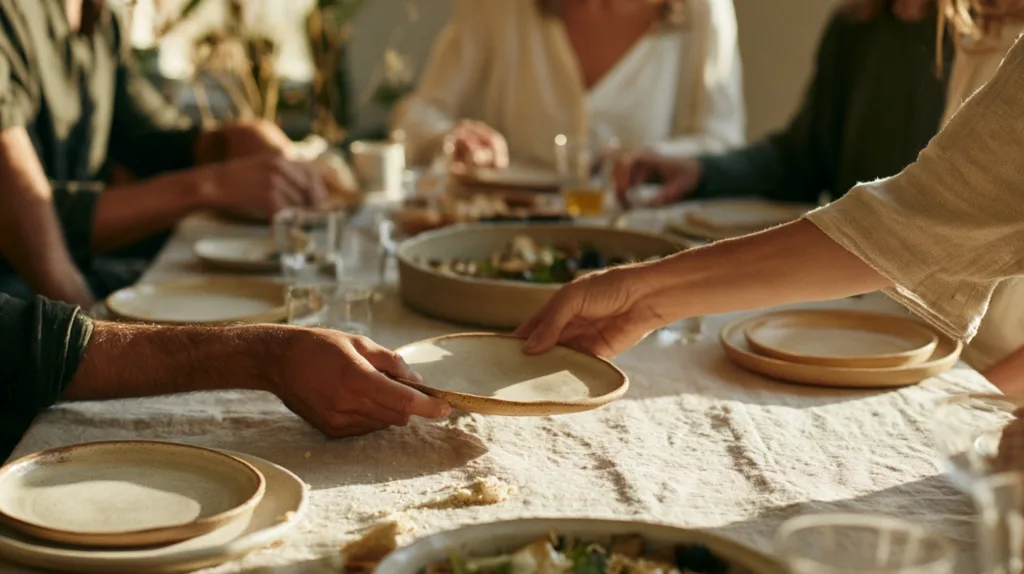
Some tables are full of food and still, somehow, not quite generous.
They’ve been laid with care. Someone has spent hours cooking. Dishes keep arriving, conversations stretch into the afternoon, and the people we love are gathered around us.
Then someone asks a question.
—“Does this have gluten in it?”
Or dairy. Or nuts. Or eggs.
For a moment, everything stops. Someone checks with the kitchen. A label is found. Nobody can quite remember what went into the sauce.
And then comes the sentence, always said with the best of intentions:
“Don’t worry. We made something else for you.”
It seems like a small thing.
Perhaps it isn’t.
Hospitality begins before anyone arrives
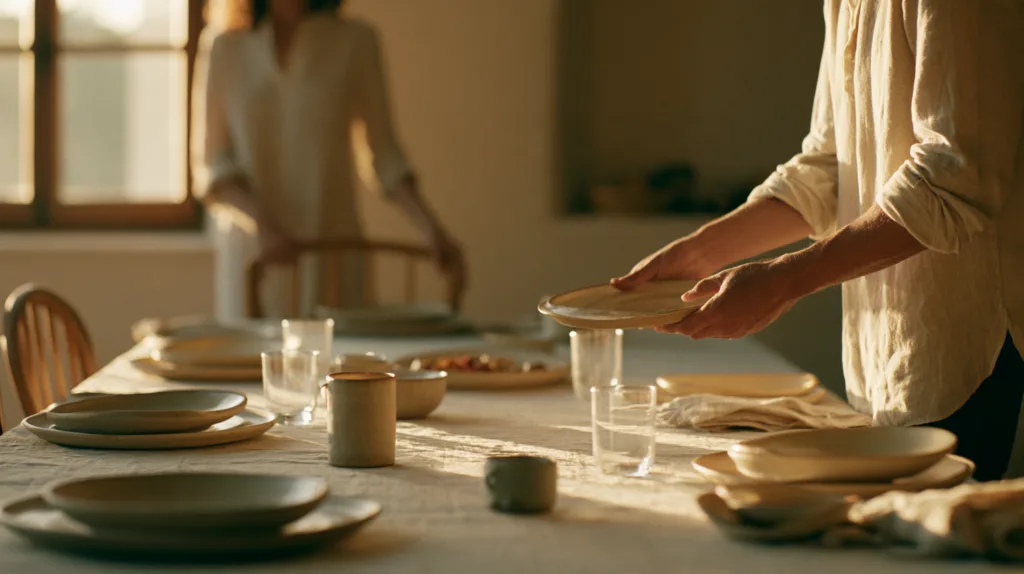
We tend to think of hospitality as the moment we open the door: a full house, a beautiful table, plenty of food.
But caring for people starts much earlier.
It starts at the market. When we plan the menu. When we choose our ingredients.
When we think about who is coming for dinner.
There is one way of cooking that begins with deciding what we want to make, then working out the exceptions afterwards.
And there is another that begins with a different question:
What could we make that everyone would genuinely want to eat?
It sounds like a subtle difference.
It changes the whole table.
Because we are no longer starting with restrictions.
We are starting with people.
“This one is for you”
There is a great deal of kindness in making a separate dish for someone.
That matters.
Anyone who cooks something different for a guest who cannot eat what everyone else is having is trying to look after them. They have probably gone to more trouble, not less.
But there is a difference — a surprisingly profound one — between hearing:
“This one is for you.”
and:
“You can have anything.”
The first says: we thought of you.
The second says: you belong here.
You don’t need to work out which plate is yours. You don’t need to watch which spoon has been used. You don’t need to explain why you eat differently. You don’t have to sit there while everyone else shares something you cannot taste.
You simply eat.
And for a while, food stops drawing attention to the thing that makes you different.
Eating is also about sharing
Food has never been just fuel.
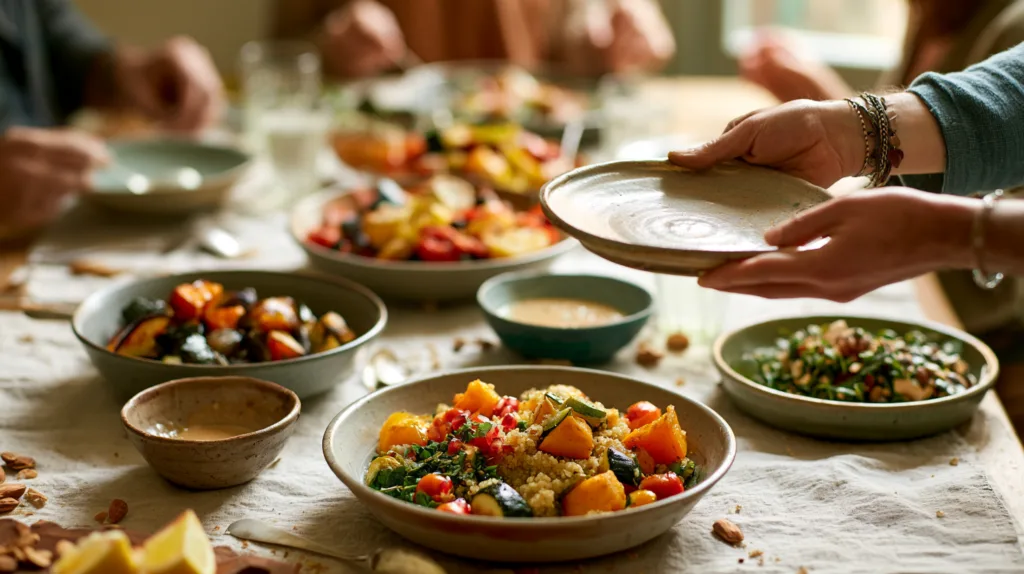
We break bread. We taste from each other’s plates. We cook recipes someone once taught us. We put candles on cakes. We bring food when somebody is ill. We ask, “Have you eaten?” when what we really mean is, “Are you all right?”
Food has an extraordinary ability to say things for us.
I was expecting you.
I thought of you.
Stay a little longer.
Perhaps that is why being left out when food is being shared can matter far more than a list of ingredients might suggest.
It isn’t simply about being able to eat.
It is about being able to take part.
A different kind of abundance
For a long time, we have associated generosity with abundance.
More dishes. More platters. More choice.
But perhaps there is another way to think about abundance.
A table can offer ten desserts and still leave one person asking which one they are allowed to eat.
Or it can offer one that everybody reaches for.
Which table is more generous?
Generosity doesn’t always mean adding more.
Sometimes it means needing fewer exceptions.
Cooking in a way that allows different people to come together around the same dish.
That doesn’t mean everyone must eat exactly the same thing.
Nor does it mean every dietary need can always be accommodated by a single recipe.
It means something much simpler:
thinking about who will be sitting around the table before deciding what goes on it.
Food that doesn’t feel like a compromise
There is something else that matters.
Including one person should not require everyone else to give up pleasure.
Because the moment it does, inclusion comes with a price.
“It’s really good for gluten-free food.”
“You can hardly tell there’s no dairy in it.”
“Para ser saludable, está bastante bien.”
Son frases aparentemente inocentes. Pero todas parten de la misma expectativa: si eliminamos algo, necesariamente tendremos que conformarnos con menos.
¿Y si la pregunta estuviera mal planteada?
¿Y si en lugar de intentar reproducir aquello que falta buscáramos ingredientes, sabores y texturas capaces de crear algo extraordinario por sí mismos?
Almendras. Avellanas. Avena. Cítricos. Cacao. Aceite de oliva. Semillas. Especias.
La despensa está llena de posibilidades.
Perhaps cooking for more people doesn’t have to narrow our possibilities.
Perhaps it can expand them.

Making room at the table
There is something deeply Mediterranean about making room.
Moving a chair.
Finding another plate.
Cutting slightly smaller slices so there is enough to go around.
Improvising.
The table stretches because someone else has arrived.
We love that image.
But perhaps making room today means something more.
It means thinking differently about food.
Creating recipes that don’t begin by asking what needs to be removed, but by asking how many people they might bring together.
Food nobody eats out of obligation.
Food nobody has to explain themselves for.
Food that looks beautiful, because beauty is part of pleasure too.
And, above all, food that tastes genuinely good.
Because truly inclusive food shouldn’t need anyone to make allowances for it.
We should simply want to eat it.
All of us.
Before we sit down
We may never be able to create a table where absolutely everyone can eat absolutely everything.
A beautiful idea does not need an impossible promise attached to it.
But we can change where we begin.
We can stop thinking about the dish first and the person who cannot eat it afterwards.
We can cook with the whole table in mind.
We can understand that a dietary restriction belongs to one person, but sharing belongs to everyone.
And perhaps we can remember something we have known all along:
Cooking for someone is one of the simplest ways of showing that they matter.
Inclusion, then, doesn’t begin when someone takes their seat.
It begins much earlier.
It begins when we decide what to put on the table.
And perhaps the most generous table isn’t the one with the most food on it.