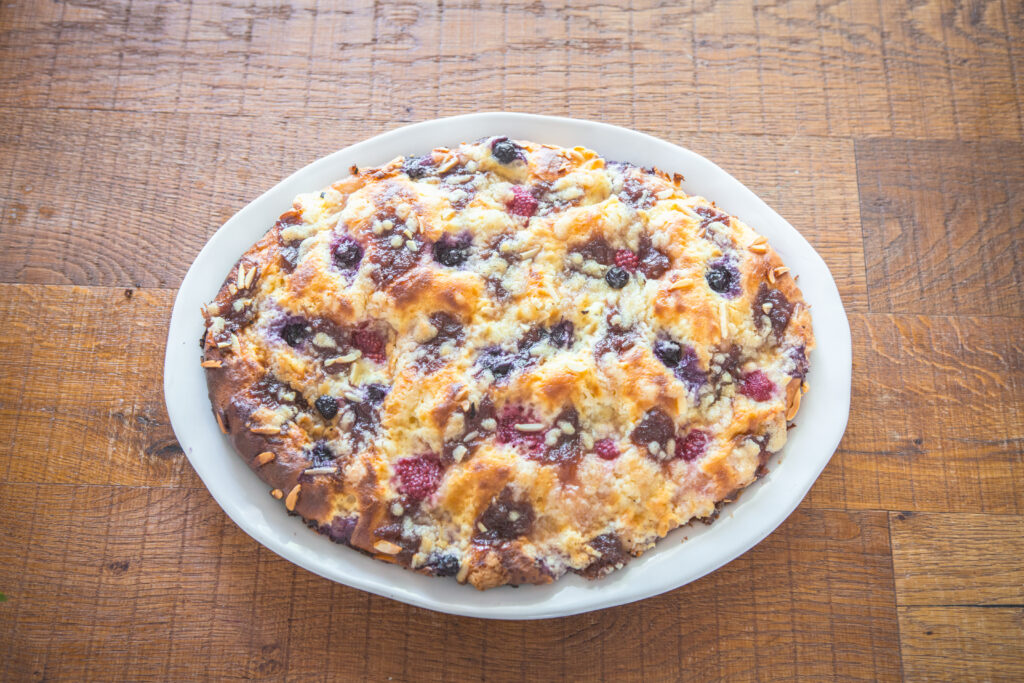
The pastry that announced the arrival of summer. Some recipes feed us. Others become part of a family’s story. This Sant Joan “Coca”, the catalan name for this pastry, belongs firmly in the second category. During the years we ran our bakery in Barcelona, we baked hundreds of cocas every June. And every Sant Joan Eve, something happened that never stopped feeling special: families would queue to take one home for the celebrations ahead. These were the cocas that meant summer had officially begun. Generous. Festive. Beautiful. The kind that sits proudly at the centre of the table while someone opens a bottle of cava, children run through the garden and conversations drift long into the warm Mediterranean night. The softness of a carefully nurtured sourdough, the richness of mascarpone and the bright acidity of rhubarb did the rest. A subtle floral note of hibiscus was the final touch that brought everything together. Even today, making it at home takes us back to those evenings of fairy lights, distant fireworks and tables shared with friends and family. The most magical night of the summer If you’re unfamiliar with Sant Joan, think of it as Catalonia’s midsummer celebration. Part festival, part family gathering, part unofficial beginning of summer. For us, it has always been one of the most special nights of the year. The night when summer truly begins. The night that smells of the sea, fireworks and warm air after sunset. We love hanging lights in the garden, setting long tables outdoors and watching the evening slowly fill with laughter, conversation and moments that quietly become memories. And if there’s one thing that never fails to appear on that table, it’s a good coca. A different kind of “coca” Traditional Sant Joan Coca will always hold a special place in our hearts. But over the years, we wanted to create a version of our own. A coca made with gluten-free sourdough. More aromatic. More complex. Full of character. A coca where the richness of mascarpone and crème fraîche could meet the gentle acidity of rhubarb in perfect balance. The result became one of the most loved recipes in our bakery. Today, we’d like to share it with you. Ingredients for the dough: 250 g of your favourite gluten-free flour blend 30 g psyllium husk (omit if your flour blend already contains psyllium or xanthan gum) 75 g softened butter or plant-based margarine 40 g cane sugar or white sugar 30 g maple syrup 1 whole egg plus 1 egg yolk (reserve the white for glazing) Zest of 1 lemon Zest of 1 orange 1 tablespoon orange blossom water 2 teaspoons honey 1 teaspoon fine sea salt 25 ml warm milk or plant-based milk (we usually use oat milk) 100 g gluten-free sourdough starter (you can find a step by step recipe for our sourdough here). Ingredients for the filling: 110 g mascarpone 110 ml crème fraîche ¼ teaspoon vanilla extract 25 g icing sugar or maple syrup Rhubarb compote: Here’s the recipe. To decorate: The reserved egg white A splash of milk or plant-based milk Sugar Flaked almonds or pine nuts Fresh raspberries Fresh blueberries Optional: Homemade crumble (recipe below) Method: 1. Prepare the dough: In a large bowl (or a stand mixer), combine the warm milk, whole egg, egg yolk, orange blossom water, honey and salt. Add the softened butter, sugar and maple syrup. Mix in the sourdough starter until fully incorporated. Add the flour and knead until the dough becomes smooth and uniform. If using a Thermomix, blend for 30 seconds on speed 6 before kneading for 4 minutes using the dough setting. If using a Thermomix, knead for 4 minutes on the Dough setting. 2. Slow fermentation Transfer the dough to a lightly greased bowl. Cover and refrigerate for at least 12 hours. This step requires patience, but it makes an enormous difference to the flavour, texture and complexity of the finished coca. The best doughs are rarely in a hurry. 3. Shape the coca: Remove the dough from the fridge and knead briefly once more. If working by hand, lightly oil your hands and the baking paper to make handling easier. Shape the dough into the traditional oval coca or spread it over a baking tray for a more rustic finish. Shape the dough into the traditional oval loaf, or simply spread it out on a baking tray. Leave it to prove for another hour somewhere warm. 4. Prepare the mascarpone cream: Whisk the mascarpone until smooth. Add the crème fraîche, vanilla and icing sugar. Continue whisking until the mixture thickens enough to hold its shape. Keep refrigerated until needed. 5. Decorate the Coca: Mix the reserved egg white with a splash of milk and brush around the edges of the dough. You have two options: Full topping: Spread the mascarpone cream across the surface of the coca, leaving a border around the edge. Top with the rhubarb compote. Traditional decoration: Using your fingertips, gently press diagonal lines into the dough. Pipe the mascarpone cream along these lines. Fill the remaining spaces with the rhubarb compote. Finish with fresh raspberries, blueberries and either flaked almonds or pine nuts. If you like, sprinkle over some homemade crumble for extra texture. 6. Bake: Place the coca in a cold oven. Set the temperature to 170°C (340°F). Bake for 45 to 55 minutes. Use bottom heat only for the first 10 minutes if your oven allows. Then continue baking with both top and bottom heat. If the coca begins browning too quickly, loosely cover it with foil until fully baked. How we like to serve it. We love serving this coca slightly warm or at room temperature. Perfect with: Freshly brewed coffee. A chilled glass of cava. Fresh summer fruit. Or simply good company. Because some recipes don’t need much more than that. No sourdough starter? You can make a quick starter instead. Quick starter: 25 g chickpea, sorghum or brown rice flour. 25 g buckwheat flour. 50
The ingredient we used to cross the border for. Some ingredients are simply discovered. Others quietly become part of your life. That’s exactly what happened with rhubarb. I first fell in love with it while living in England. Every spring it would appear in markets, bakeries and family kitchens as though it had always belonged there. Its flavour stayed with me. Bright. Tangy. Elegant in its simplicity. Unlike anything I’d tasted before. Years later, when we opened our bakery in Spain, I simply couldn’t imagine spring without it. So every year, as soon as rhubarb came into season, I’d drive across the French border to Perpignan and fill the car with fresh stalks. Back at the bakery we’d cook huge batches of compote that would last us for months. That compote became the heart of one of Milola’s most loved Coca de Sant Joan recipes — the traditional sweet bread that marks the arrival of summer across Catalonia. Families came back for it year after year. For many of them, it simply wasn’t Sant Joan without it. A wonderful ingredient waiting to be discovered While rhubarb has been part of Northern European baking for centuries, it’s still surprisingly uncommon in Spain. Fortunately, it’s becoming easier to find through specialist greengrocers and online suppliers. Nosotros solemos comprarlo en Fruites i Verdures Giró, en el Mercat de Sant Antoni. If you’ve never cooked with rhubarb before, this is a wonderful place to begin. And if you can, make a little extra. You’ll thank yourself when we use it in another very special recipe. So much more than a topping. Although this compote became famous in our bakery thanks to our Coca de Sant Joan, it quickly found its way into countless other recipes. We love serving it with: Yogurt (dairy or plant-based) Granola. Porridge. Cheesecakes. Fruit tarts. Muffins. Brioche. Chocolate mousse. Toast with butter or nut butter. Its balance of sweetness, gentle acidity and floral notes makes it one of those preparations you’ll always be happy to find waiting in the fridge. Ingredients: 1 kg fresh rhubarb 200 g raw cane sugar 10 dried hibiscus flowers 1/2 teaspoon vanilla extract (optional) 1 teaspoon ground ginger (optional) 2 star aniseed pods Method: 1. Prepare the rhubarb Wash the rhubarb thoroughly and trim both ends. If the stalks are particularly thick, slice them lengthwise before cutting them into roughly 2 cm pieces. Set aside about 200 g and place the rest in a heavy-based saucepan. 2. The first cook Add the sugar and dried hibiscus flowers. The hibiscus deepens the colour beautifully while adding delicate floral notes that complement rhubarb’s natural tartness. Stir gently. Cover the pan and cook over a low heat for around 15 minutes, until the rhubarb begins releasing its juices. 3. Build the texture Remove the lid and increase the heat slightly. Add the reserved rhubarb pieces. This keeps part of the fruit intact, giving the finished compote a far more interesting texture. Continue cooking for another 15 minutes. It’s ready when you can draw your finger across the back of a spoon and the line stays clean. 4. Cool Transfer the compote to a large bowl. Once cool, remove the hibiscus flowers. It’s ready to enjoy. How to store it: The compote keeps beautifully in an airtight container in the refrigerator for several days. It also freezes exceptionally well. In fact, that’s exactly what we used to do every spring so we could enjoy rhubarb long after the season had finished. A small defence of rhubarb – We have a soft spot for ingredients that still manage to surprise people. Rhubarb is one of them. It doesn’t try to taste like strawberries. Or apples. Or plums. It has a character entirely its own. Perhaps that’s why it pairs so effortlessly with vanilla, citrus, strawberries, chocolate and hibiscus. If you’ve never cooked with rhubarb before, we hope this recipe marks the beginning of a long friendship. Because some recipes belong to a season. Others stay with you for life. You can watch a video of the recipe step by step here.
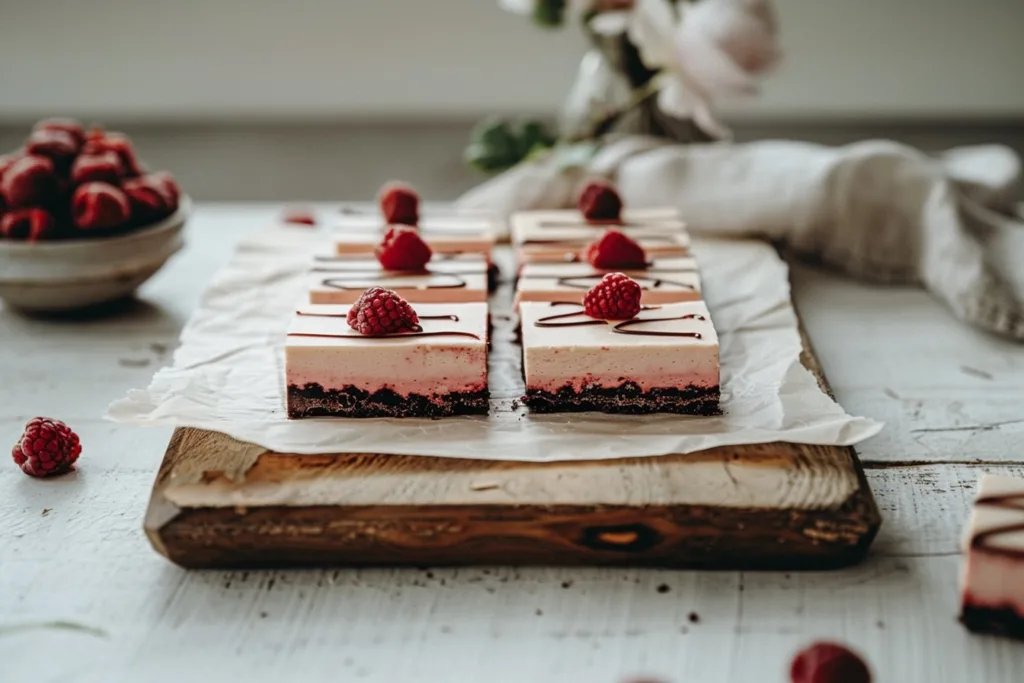
The recipe that can’t decide whether it wants to be bars or a cake. Some recipes arrive knowing exactly what they want to be. And then there are these. Technically, they’re bars. But change the tin and suddenly they become a rather spectacular cake. We prefer to think they’re simply adaptable. An impromptu afternoon treat. Dinner with friends. A birthday celebration. Or an ordinary Tuesday that deserves improving slightly. They work remarkably well in every situation. An unexpectedly good combination. Chocolate and raspberries have been getting along beautifully for decades. No surprises there. But then come the cashews. The coconut. The orange. And one unexpected guest: beetroot. It brings colour, moisture and a depth that’s surprisingly difficult to describe and very easy to enjoy. Some recipes turn out to be far better than their ingredient list has any right to suggest. This is one of them. Ingredients for the base: 160g of Milola Double Chocolate and Banana cookies 120 g almond flour 40 g melted coconut oil Ingredients for the filling: 240 g cashews soaked overnight or for 20 minutes in hot water 120 g coconut cream (the thick part from a tin of coconut milk) 50 g melted coconut oil 60 g maple syrup 125 g fresh raspberries 50g of raw beetroot 1/2 teaspoon vanilla extract Zest of one orange To decorate: Melted dark chocolate Method – 1. Prepare the base: Preheat the oven to 180°C (350°F). Blend the cookies, almond flour and coconut oil until the mixture resembles damp sand. Press firmly into your chosen tin. Rectangular for bars. Round for cake. We’re not here to judge. Bake for approximately 10 minutes. Remove from the oven and allow to cool completely. 2. Prepare the filling: Drain the cashews well and place them in a food processor. Add the coconut cream, coconut oil, maple syrup, raspberries, beetroot, vanilla and orange zest. Blend for several minutes until the mixture becomes completely smooth and silky. Patience is rewarded here. 3. Assemble and chill: Pour the filling over the cooled base and smooth the surface. Refrigerate for at least three to four hours until firm. Or overnight if you’re one of those admirable people capable of waiting. We rarely are. 4. The finishing touch: Drizzle with melted dark chocolate. Cut into bars or slices. Serve cold. And accept compliments gracefully. Variations we love Swap the raspberries for strawberries or mixed berries. Add chopped pistachios for extra texture. Serve with coconut yoghurt or plant-based crème fraîche. How we like to serve them: Very cold. With coffee. With a good cup of matcha tea. With a very cold glass of cava. Or directly from the fridge at eleven o’clock at night while promising ourselves this will definitely be the last piece. A small defence of beetroot Beetroot has something of an image problem. Most of us associate it with salads and not much else. But when it meets chocolate, something rather extraordinary happens. It brings moisture. Depth. And a complexity that’s difficult to identify but impossible to ignore. Perhaps that’s why beetroot has quietly found its way into some of the world’s best chocolate cakes. And perhaps that’s why these bars disappear considerably faster than they should. If you make them, we’d love to know whether they ended up as bars or cake. We hope you enjoy this recipe as much as we do. If you’d like to see a video tutorial, you can watch it here. Enjoy!
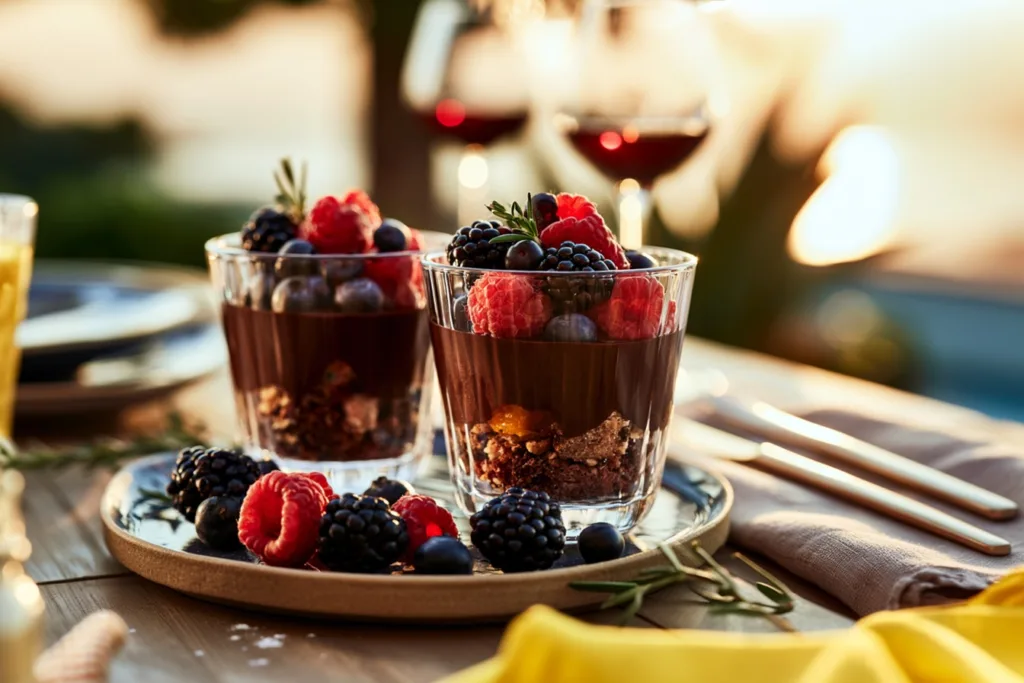
The dessert nobody guesses is made with tofu. Some ingredients have excellent press. And then there’s tofu. Possibly one of the most misunderstood ingredients in modern cooking. Because when it appears in a chocolate mousse like this, something rather amusing happens: Nobody sees it coming. All they notice is chocolate. Lots of chocolate. A silky, surprisingly light texture. And that wonderful feeling of eating something deeply indulgent that just happens to be plant-based and dairy-free. A small pastry chef’s secret. Silken tofu has an extraordinary ability to disappear. Not literally, of course. But it does have a remarkable talent for becoming whatever surrounds it. In this case, it becomes the perfect partner for dark chocolate. It brings creaminess. Lightness. And a texture that feels far closer to a classic French mousse than most people would ever expect. Ingredients: 340 g dark chocolate 340 g silken tofu (important: silken, not firm) 60 g soy milk 2 tablespoons maple syrup 1 teaspoon vanilla extract (optional) To serve: Milola Orange, Almond & Cardamom Cookies Fresh berries Si prefieres una versión completamente vegana, puedes utilizar nuestra galleta de Doble Chocolate. Method: 1. Prepare the tofu. Break the tofu into a sieve and allow it to drain for a couple of hours to remove excess moisture. This small step makes a surprisingly big difference to the final texture. 2. Melt the chocolate. Melt the chocolate gently using a bain-marie or short bursts in the microwave. Allow it to cool slightly before using. 3. Make the mousse. Place the drained tofu, soy milk, maple syrup and vanilla into a blender. Blend until completely smooth and silky. Add the melted chocolate and blend again until the mousse becomes glossy and perfectly uniform. That’s it. How we like to serve it. We love breaking some Orange, Almond and Cardamom cookies into the bottom of a glass and alternating layers of cookie and mousse. The richness of the chocolate, the perfume of citrus and cardamom and the freshness of the berries do the rest. Finish with a whole cookie and a few fresh berries on top. It looks like the sort of dessert you’d order in a restaurant. And yet it probably took less time to make than choosing what to watch after dinner. A small lesson about chocolate – Chocolate has an extraordinary ability to make people happy. We’re not aware of any scientific studies proving it. But we’re not aware of many people willing to argue the point either. And this mousse probably won’t help settle the debate. If you make it, we’d love to hear how long it survives in your fridge.
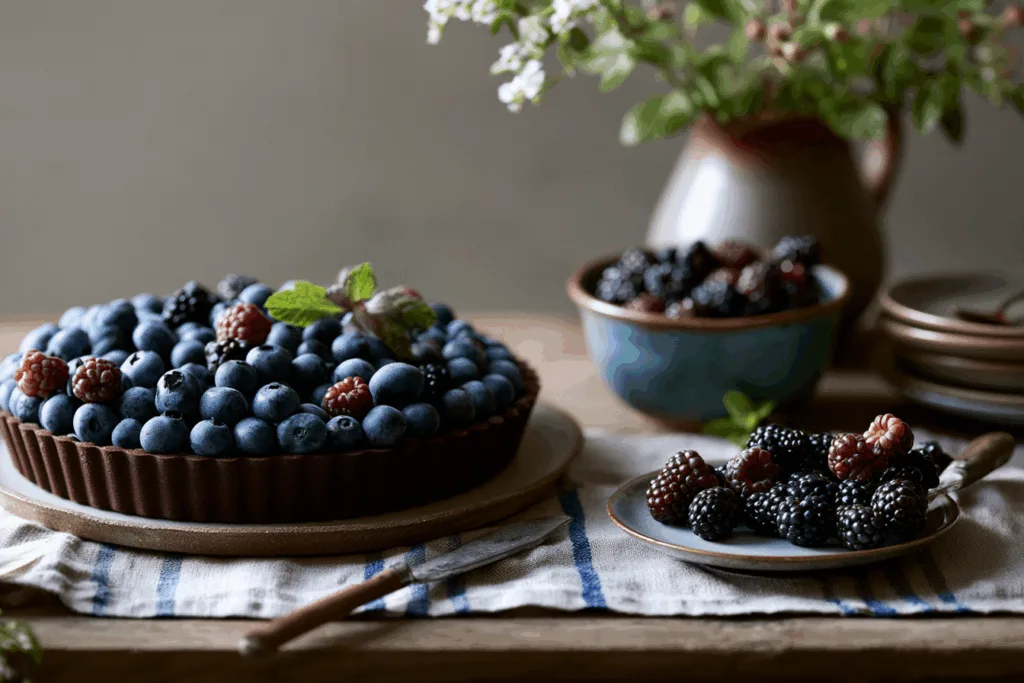
A summer tart that’s as easy to make as it is hard to share. Some desserts impress because of the technique behind them. Others impress because nobody expects something so simple to taste quite this good. This tart firmly belongs in the second category. The richness of a dark chocolate cookie base. The bright acidity of blueberries and lime. The creaminess of coconut. And that almost foolproof combination of fruit and chocolate that has been making people happy for generations. It’s also vegan, gluten-free and surprisingly easy to make. Every good tart starts with a good biscuit We like to think that some recipes begin long before you turn on the oven. They begin with an ingredient that’s already good enough to stand on its own. In this case, everything starts with our Double Chocolate and Banana cookies. Rich. Chocolatey. Slightly fudgy. The sort of biscuit that’s perfectly happy being eaten straight from the packet. But generous enough to become the base of something entirely different too. Ingredients: For the base: 250 g Milola Double Chocolate and Banana cookies. 110 g coconut oil. For the filling: 375 g blueberries. 250 g coconut milk. 240 g coconut yogurt. 70 g maple syrup. 1 tsp agar agar. Zest of 1 lime. 1/4 teaspoon salt. To decorate: Raspberries Fresh figs Blueberries Strawberries Fresh mint leaves Lime wedges Method: 1. Prepare the base: Preheat the oven to 180°C (350°F). Lightly grease your tart tin with coconut oil and place it in the fridge. Crush the cookies into fine crumbs and mix them with the melted coconut oil. Press the mixture firmly into the base and sides of the tin. Bake for approximately 12 minutes. Leave to cool while you prepare the filling. 2. Prepare the filling: Blend the blueberries and coconut milk until smooth. For an especially silky texture, pass the mixture through a sieve. Transfer to a saucepan and add the agar agar. Bring gently to the boil and cook for two to three minutes, stirring continuously. Reduce the heat and stir in the maple syrup, coconut yogurt, lime zest and salt. Cook for one more minute over a low heat. Remove from the heat and allow to cool slightly. 3. Assemble the tart: Pour the filling over the biscuit base. Refrigerate for at least four hours to allow the tart to set properly. Good things tend to reward patience. 4. Decorate: Just before serving, decorate with fresh fruit, mint leaves and lime wedges. It doesn’t need much more than that. How we like to serve it: Cold. Very cold. With coffee. With tea. With a very cold glass of cava. Or simply on a table full of people you’d quite like to impress. It works remarkably well in all four situations. If you want to see a video of the recipe step by step, you can do so here. A small lesson about chocolate Some ingredients demand attention. Y otros que saben hacer que todo lo que tienen alrededor sea mejor. Chocolate somehow manages to do both. Perhaps that’s why it has remained irresistible for centuries. And perhaps that’s why this tart never lasts very long once it reaches the table. If you make it, we’d love to hear how long yours survives.
-10%
UNLOCK A 10% DISCOUNT ON YOUR FIRST PURCHASE!
Enter your email address to receive the discount coupon
in your inbox right away. You'll also receive exclusive offers and content
available only to subscribers.