
Gluten-Free Sourdough Sant Joan pastry with Mascarpone and Rhubarb
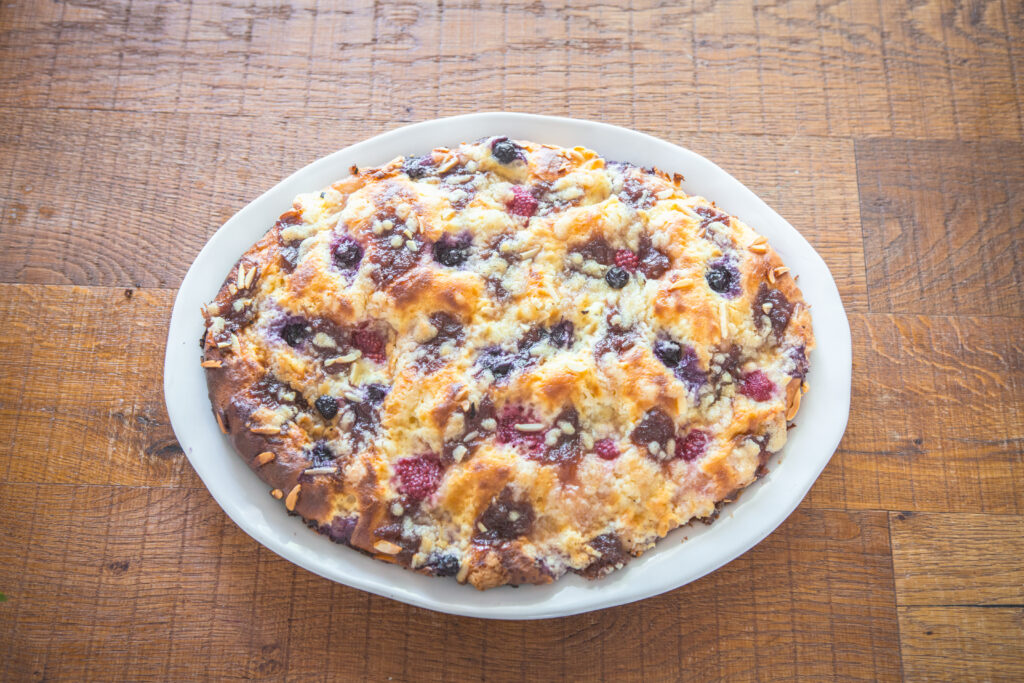
The pastry that announced the arrival of summer. Some recipes feed us. Others become part of a family’s story. This Sant Joan “Coca”, the catalan name for this pastry, belongs firmly in the second category. During the years we ran our bakery in Barcelona, we baked hundreds of cocas every June. And every Sant Joan Eve, something happened that never stopped feeling special: families would queue to take one home for the celebrations ahead. These were the cocas that meant summer had officially begun. Generous. Festive. Beautiful. The kind that sits proudly at the centre of the table while someone opens a bottle of cava, children run through the garden and conversations drift long into the warm Mediterranean night. The softness of a carefully nurtured sourdough, the richness of mascarpone and the bright acidity of rhubarb did the rest. A subtle floral note of hibiscus was the final touch that brought everything together. Even today, making it at home takes us back to those evenings of fairy lights, distant fireworks and tables shared with friends and family. The most magical night of the summer If you’re unfamiliar with Sant Joan, think of it as Catalonia’s midsummer celebration. Part festival, part family gathering, part unofficial beginning of summer. For us, it has always been one of the most special nights of the year. The night when summer truly begins. The night that smells of the sea, fireworks and warm air after sunset. We love hanging lights in the garden, setting long tables outdoors and watching the evening slowly fill with laughter, conversation and moments that quietly become memories. And if there’s one thing that never fails to appear on that table, it’s a good coca. A different kind of “coca” Traditional Sant Joan Coca will always hold a special place in our hearts. But over the years, we wanted to create a version of our own. A coca made with gluten-free sourdough. More aromatic. More complex. Full of character. A coca where the richness of mascarpone and crème fraîche could meet the gentle acidity of rhubarb in perfect balance. The result became one of the most loved recipes in our bakery. Today, we’d like to share it with you. Ingredients for the dough: 250 g of your favourite gluten-free flour blend 30 g psyllium husk (omit if your flour blend already contains psyllium or xanthan gum) 75 g softened butter or plant-based margarine 40 g cane sugar or white sugar 30 g maple syrup 1 whole egg plus 1 egg yolk (reserve the white for glazing) Zest of 1 lemon Zest of 1 orange 1 tablespoon orange blossom water 2 teaspoons honey 1 teaspoon fine sea salt 25 ml warm milk or plant-based milk (we usually use oat milk) 100 g gluten-free sourdough starter (you can find a step by step recipe for our sourdough here). Ingredients for the filling: 110 g mascarpone 110 ml crème fraîche ¼ teaspoon vanilla extract 25 g icing sugar or maple syrup Rhubarb compote: Here’s the recipe. To decorate: The reserved egg white A splash of milk or plant-based milk Sugar Flaked almonds or pine nuts Fresh raspberries Fresh blueberries Optional: Homemade crumble (recipe below) Method: 1. Prepare the dough: In a large bowl (or a stand mixer), combine the warm milk, whole egg, egg yolk, orange blossom water, honey and salt. Add the softened butter, sugar and maple syrup. Mix in the sourdough starter until fully incorporated. Add the flour and knead until the dough becomes smooth and uniform. If using a Thermomix, blend for 30 seconds on speed 6 before kneading for 4 minutes using the dough setting. If using a Thermomix, knead for 4 minutes on the Dough setting. 2. Slow fermentation Transfer the dough to a lightly greased bowl. Cover and refrigerate for at least 12 hours. This step requires patience, but it makes an enormous difference to the flavour, texture and complexity of the finished coca. The best doughs are rarely in a hurry. 3. Shape the coca: Remove the dough from the fridge and knead briefly once more. If working by hand, lightly oil your hands and the baking paper to make handling easier. Shape the dough into the traditional oval coca or spread it over a baking tray for a more rustic finish. Shape the dough into the traditional oval loaf, or simply spread it out on a baking tray. Leave it to prove for another hour somewhere warm. 4. Prepare the mascarpone cream: Whisk the mascarpone until smooth. Add the crème fraîche, vanilla and icing sugar. Continue whisking until the mixture thickens enough to hold its shape. Keep refrigerated until needed. 5. Decorate the Coca: Mix the reserved egg white with a splash of milk and brush around the edges of the dough. You have two options: Full topping: Spread the mascarpone cream across the surface of the coca, leaving a border around the edge. Top with the rhubarb compote. Traditional decoration: Using your fingertips, gently press diagonal lines into the dough. Pipe the mascarpone cream along these lines. Fill the remaining spaces with the rhubarb compote. Finish with fresh raspberries, blueberries and either flaked almonds or pine nuts. If you like, sprinkle over some homemade crumble for extra texture. 6. Bake: Place the coca in a cold oven. Set the temperature to 170°C (340°F). Bake for 45 to 55 minutes. Use bottom heat only for the first 10 minutes if your oven allows. Then continue baking with both top and bottom heat. If the coca begins browning too quickly, loosely cover it with foil until fully baked. How we like to serve it. We love serving this coca slightly warm or at room temperature. Perfect with: Freshly brewed coffee. A chilled glass of cava. Fresh summer fruit. Or simply good company. Because some recipes don’t need much more than that. No sourdough starter? You can make a quick starter instead. Quick starter: 25 g chickpea, sorghum or brown rice flour. 25 g buckwheat flour.