How to Store Gluten-Free Flours, Seeds and Nuts at Home
Information
A practical guide to keeping a healthy pantry and getting the most from your ingredients
One of the things we learned when we started working with gluten-free ingredients is that a well-stocked pantry isn’t just about what you buy—it’s also about how you store it.
Ancient grain flours, seeds, nuts, legumes and spices can stay in excellent condition for much longer when stored properly. Not only will you reduce food waste, but you’ll also preserve their flavour, texture and nutritional value.
The good news? You don’t need any complicated solutions. A freezer and a few airtight glass jars can make all the difference.
What do we mean by “superfoods”?
Although the term superfood has become increasingly popular in recent years, there is no official scientific definition.
It is generally used to describe foods with particularly interesting nutritional properties, such as whole grains, seeds, nuts, legumes, berries and nutrient-rich vegetables.
Interestingly, some of the most humble pantry staples—such as lentils or oats—can be just as nutritious as many of the more exotic ingredients often associated with this category.
Ingredients that deserve special care
Flours and grains
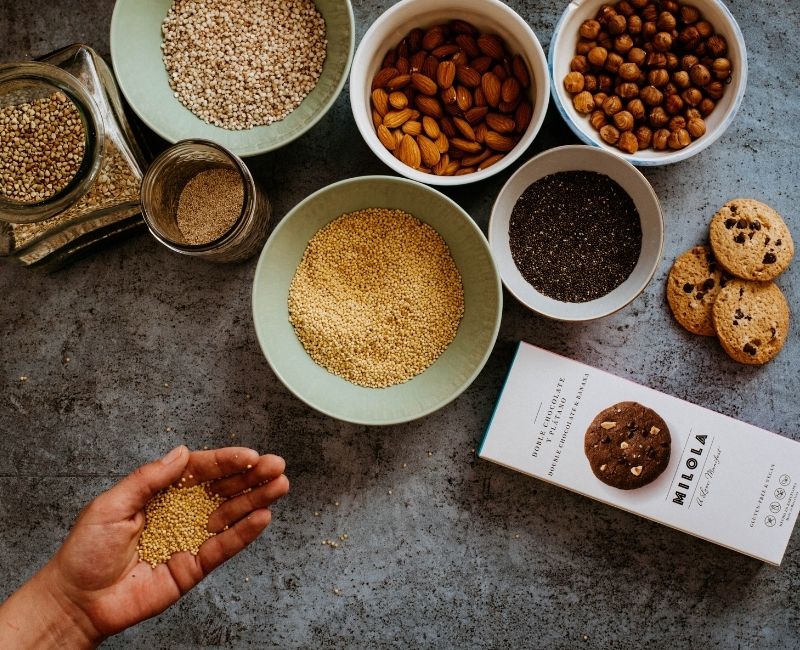
In a gluten-free kitchen, it’s common to work with a wide variety of grains and pseudocereals, including:
Buckwheat
Millet
Quinoa
Amaranth
Teff
Rice
Corn
Sorghum
When you bring them home—especially if they’re organic or sourced from small producers—it’s a good idea to keep them in the freezer for 48 to 72 hours before storing them in your pantry. This simple step can help prevent potential insect infestations caused by microscopic eggs that may occasionally be present in raw ingredients.
Afterwards, transfer them to airtight glass containers and store them in a cool, dry place.
Seeds
Seeds contain valuable natural oils, but these oils are also more vulnerable to oxidation.
Chia Seeds (the star of one of our most popular cookies) – You can store chia seeds directly in the freezer and simply scoop out the amount you need whenever you’re preparing a recipe.
Flax seeds – If they’re ground, the freezer is particularly helpful. It prevents the oils from turning rancid and helps preserve their nutritional qualities for longer.
Nuts
Almonds, hazelnuts, walnuts and pistachios are excellent sources of healthy fats, but they can become rancid over time.
If you buy nuts in larger quantities, a simple strategy is to keep a small amount in your pantry for everyday use and store the rest in the freezer.
For example:
250 g in an airtight jar for daily use.
The remaining quantity in the freezer.
Refill as needed.
This is the system we use at home. It allows us to buy larger quantities while keeping everything fresh for longer.
What about powdered superfoods?
Ingredients such as:
Açaí
Lucuma
Moringa
Ashwagandha
Beetroot powder
Kale powder
Spinach powder
They´re usually sold in small quantities and have very low moisture levels. In most cases, they can simply be stored in a cool, dry cupboard, away from heat and direct sunlight.
How to store berries
When it comes to berries, frozen is often best.
Keeping them in the freezer allows you to use exactly what you need for:
Smoothies
Porridge
Yogurt bowls
Cakes and bakes
Homemade ice creams
without worrying about them spoiling after a few days in the fridge.
Why is it worth taking a few minutes to organise your pantry?
Because proper storage helps you:
Reduce food waste.
Preserve flavour and texture.
Maintain nutritional quality.
Save money by buying larger quantities.
Always have quality ingredients ready to use.
At Milola, we believe that good cooking starts long before you switch on the oven.
It starts when you choose good ingredients. When you understand them. When you take care of them.
Because a more conscious way of eating isn’t about collecting extraordinary products. It’s about making the most of simple ingredients that deserve a place in our everyday lives.
¡Únete a nuestra comunidad de amantes de la cocina!
¿Te apasiona cocinar y quieres descubrir nuevas recetas deliciosas y saludables? ¡Suscríbete a nuestra newsletter y recibe directamente en tu bandeja de entrada:
Recetas exclusivas y fáciles de seguir
Consejos y trucos culinarios
Ingredientes frescos y nutritivos
Inspiración para tus comidas diarias
Descuentos y promociones especiales
¡No te pierdas la oportunidad de llevar tus habilidades culinarias al siguiente nivel! Suscríbete ahora y comienza a disfrutar de una cocina más saludable y sabrosa.
Hola, soy Manuela Saavedra, fundadora de Milola Gluten Free. Estoy encantada de darte la bienvenida a este espacio dedicado a todos los apasionados de la cocina que, como yo, buscan una alimentación más saludable y natural.
Enter your email address to receive the discount coupon
in your inbox right away. You'll also receive exclusive offers and content
available only to subscribers.