Sometimes, discovering a new way to cook means looking back. A cuisine shaped by travel When we start cooking without gluten, one of the first words that comes up is substitution. What can we use instead of flour? It seems like a perfectly reasonable question. But it also starts from a slightly strange assumption: that there is one original way of cooking, and everything else is an alternative. The history of our food tells a rather different story. Nearly three thousand years ago, ingredients, crops and ways of cooking were already moving around the Mediterranean. They travelled with people. They crossed the sea. They arrived somewhere new and, little by little, stopped being new. Almonds were among them. By the beginning of the first millennium BCE, almonds were already among the new crops arriving in the south of the Iberian Peninsula through the networks connecting the eastern and western Mediterranean. Over time, their cultivation spread to other regions. They were just one of many layers added over the centuries. The Phoenicians and other Mediterranean peoples brought new crops and new ways of growing, preparing and preserving food. Other influences followed. And each encounter added ingredients, techniques and customs to a cuisine that has never stopped changing. An ingredient that travelled from kitchen to kitchen Centuries later, Muslims, Sephardic Jews and Christians cooked alongside one another on the same peninsula for generations. They didn’t eat exactly the same things. Each community had its own customs, celebrations, prohibitions and ways of preparing food. But nor did they cook in isolated worlds. Ingredients travelled from one kitchen to another. So did techniques. Spices. Ways of preserving food. Sweets. Doughs. And the stories that went with them. And almonds became part of all of those culinary traditions. They were toasted. Ground. Mixed with honey and spices. Turned into pastes, sauces, drinks, fillings and sweets. And they stayed. So much so that today it is hard to imagine our food without them. Turrón. Marzipan. Tarta de Santiago. Mallorcan gató. Ajoblanco. And, of course, our Almond, Orange, and Cardamom Cookie. Recipes born in different places and at different times, all sharing an ingredient that has travelled and evolved with them over centuries. When recipes had to travel too And the journey didn’t end there. In 1492, the Sephardic Jews expelled from the Iberian Peninsula took their language, their customs and their way of cooking with them. Recipes crossed the Mediterranean once again. They reached the Ottoman Empire, among other places. There, that culinary tradition encountered new ingredients, flavours and customs, and continued to evolve. Centuries later, we can still see traces of that journey in the names and in the dishes themselves. The Instituto Cervantes in Istanbul describes, for example, how some dishes preserved by Sephardic communities bear a striking resemblance to recipes from the Iberian Peninsula: travados and mustuchudos recall Spanish pestiños and mostachones, while pandispaña is a sponge cake introduced into Turkish society by Sephardic Jews. The cooking had travelled with the people. And they had kept cooking. An alternative to what? Perhaps that’s why it feels a little strange to call almonds an alternative today. An alternative to what? Nobody eats a piece of turrón and thinks it’s missing wheat. Nor do we think marzipan is missing flour. A Mallorcan gató isn’t an incomplete cake. These foods are what they are precisely because of the almonds. When we grind almonds, they don’t behave like wheat. Nor should they. They naturally contain fat. They bring moisture. They create a different texture. Toast them and their flavour deepens. They can help keep a cake tender and produce results that would be completely different with other ingredients. They have a character of their own. And perhaps the problem begins when we stop seeing almonds for what they are and start seeing them only as something that can take the place of something else. Because then we stop asking what they can bring and start asking them to imitate something else. From substituting to discovering Perhaps one of the most interesting things cooking without gluten has taught us is precisely this. At first, we ask: What can I substitute for this? Over time, we start asking: What can I make with this? They are very different questions. The first tries to take us back to where we started. The second can take us somewhere new. Or, curiously, somewhere very old. Because when we open our cupboards, we find almonds, rice, maize, pulses, seeds, fruit, cocoa, spices… Ingredients that arrived at different times, from different places, and that today feel entirely our own. More ingredients, more possibilities Our food culture has never stood still. It has travelled. It has mixed with others. It has learned from them. It has absorbed new ingredients, techniques and customs. And made them its own. Then it has travelled again, carrying all of that with it. Perhaps that is one of the great riches of our food culture. And a good reason to stop thinking that cooking for more people means cooking with fewer possibilities. History seems to suggest precisely the opposite. The more ingredients we know, the more ways we have to cook. The almond is just one of them. And it has been here all along.
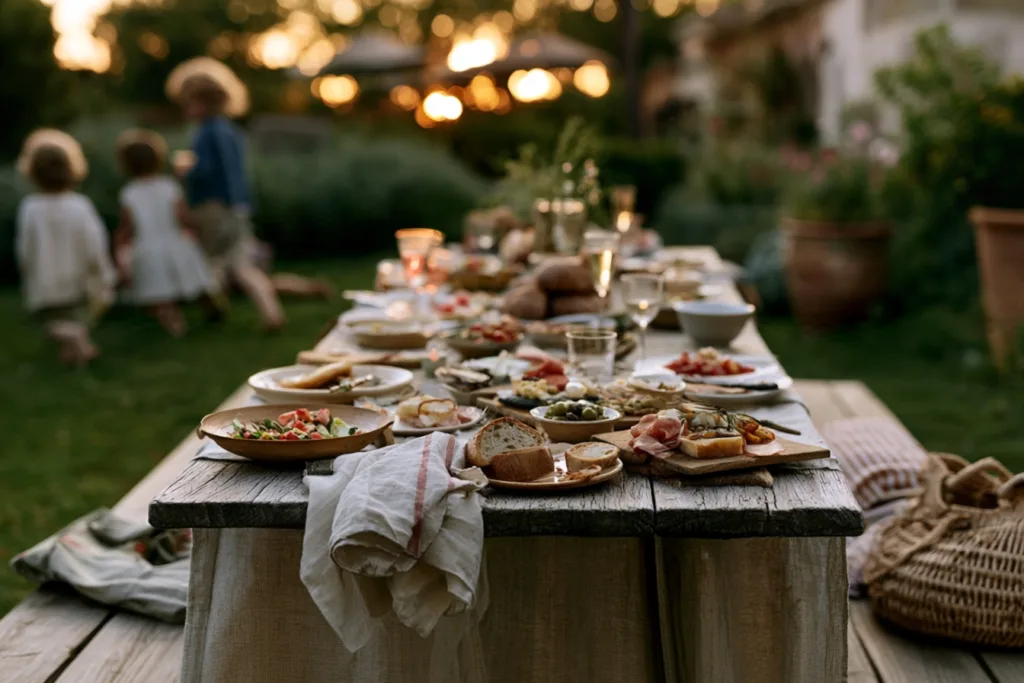
Cooking for someone with different dietary needs can feel limiting. Until you discover all the possibilities it opens up. There are recipes we make almost without thinking. We know which flour to use. How long a dough needs. Which ingredient adds moisture, which gives structure, which makes something crisp. Or perhaps we know none of that. We just know the recipe works. Until one day, someone sits down at our table and can’t eat one of those things. Suddenly, the recipe we know no longer works as written. We can see that as a problem. Or we can get curious. So what do we do now? For someone who loves cooking, that question can be the beginning of something surprisingly fun. For me, it certainly was. When the usual answer stops working Cooking involves a lot of repetition. We learn a technique, a combination, a proportion. We discover that it works and add it to our repertoire. But cooking is also about experimenting. What happens if I change this? What if I use that? How can I get this texture another way? What if, instead of trying to recreate the same recipe, I start again? Creativity in the kitchen often begins when we can no longer do things the way we always have. Because that’s when we have to look at ingredients again. Not as a list to follow, but as a set of possibilities. An almond stops being simply something we add to a cake and becomes moisture, fat, flavour and texture. A seed can add crunch. Oats can bring softness. Teff can deepen the flavour of cocoa. Buckwheat can add a depth of flavour that wasn’t there before. And little by little, we stop asking only what we can take away. We start asking what we can make. This is how cooking has always worked Cooking has never really been about having every possible ingredient at our disposal. We cook with what we have. With what grows nearby. What’s in season. What we can preserve. What we’ve learnt from the people who cooked before us. So much of the way we cook came about in exactly this way. Fermenting, drying, pickling, grinding, toasting, slow cooking. Finding ways to turn what was available into something extraordinary. Cooking is full of creative responses to particular circumstances. Not because a restriction is something to wish for. And not because anyone who cooks is obliged to turn it into an adventure. Simply because, when we love cooking, being faced with a new question can awaken something we know very well: the urge to experiment. And then new ingredients find their way into our kitchens Perhaps we buy chickpea, teff, millet or sorghum flour for the first time. Or we discover what happens when we toast hazelnuts before adding them to the dough. We begin to understand that two flours that seemed interchangeable can behave in completely different ways. We discover that a particular texture doesn’t necessarily depend on a single ingredient. We try. We get it wrong. We change the proportions. We try again. And sometimes something even more interesting happens. The recipe we only made because someone couldn’t eat the original turns out to be the one we prefer. It isn’t a copy. It isn’t the special version. We don’t need to explain what’s missing before we serve it. It’s simply a recipe worth keeping. Some discoveries are meant to be shared There are eight of us around a table. One person can’t eat gluten. We can make the usual dessert and find a second option for them. Sometimes that will be the best solution. And that’s absolutely fine. But we can also ask a different question: What if we made one extraordinary dessert that all eight of us could share? Not one that’s good for gluten-free. Not one whose main achievement is that everyone can eat it. One we would put in the middle of the table even if nobody had any dietary restrictions at all. Because it’s delicious. That small shift completely changes where we begin. We’re no longer thinking about what we need to make for that person. We’re thinking about what all of us would like to eat. One table, not two There’s a cake in the middle. Or some biscuits. Or a loaf of bread. Someone cuts a slice. Someone else takes a piece. Someone asks if there’s any left. Nobody asks which one is theirs. There isn’t one thing for everyone and something else set aside. There’s just food. One table, not two. It won’t always be possible, and it doesn’t have to be. Sometimes making different things is simply the most sensible thing to do. Generosity isn’t about turning every meal into an exercise in perfection. But when we cook in a way that allows more people to share the same thing, something lovely happens. And not only for the person who might otherwise have needed a separate option. The table becomes more interesting for everyone. Cooking for more people can expand our repertoire Perhaps that’s the paradox. At first, it feels as though we have fewer possibilities. An ingredient disappears. A familiar recipe no longer works. One door closes. But then we start looking, and others open. Ingredients we didn’t know.Techniques we’d never tried.Flavours we’d never combined.Recipes we probably would never have made. And suddenly, instead of having fewer options, we have more. In Not Everything Has to Be Wheat, we explored what happens when we stop seeing other ingredients simply as substitutes. Perhaps limitations can work in much the same way. Sometimes, cooking for someone else takes us somewhere we wouldn’t have gone on our own. And that’s where the discoveries begin. Because perhaps one of the loveliest things about cooking is precisely this: thinking we’re looking for a solution and finding a new possibility instead.
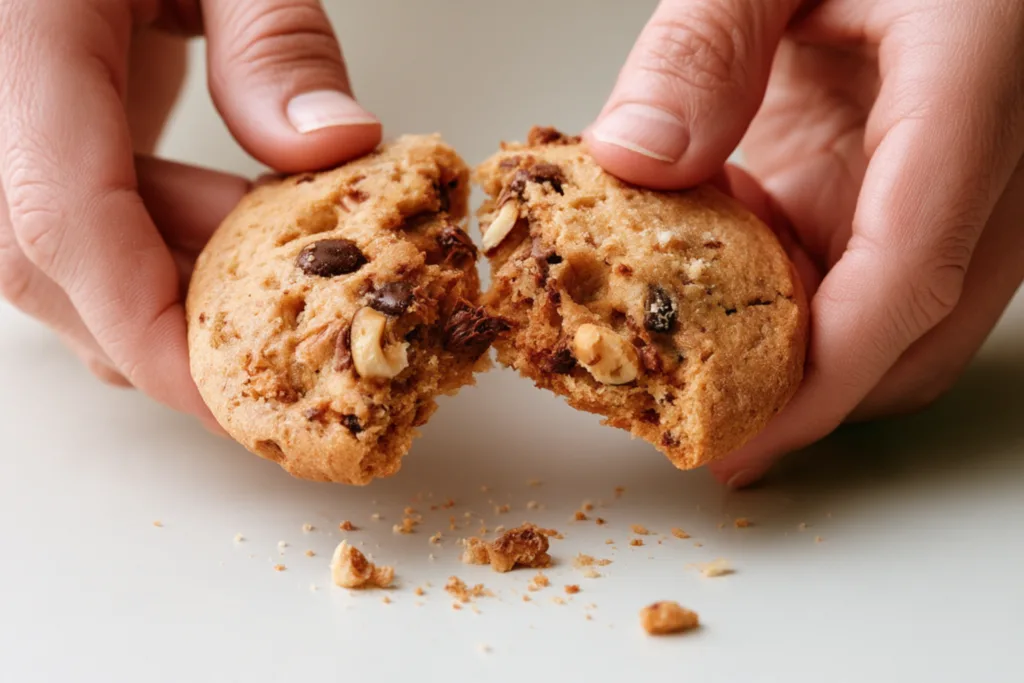
Living without wheat can be a necessity. Discovering everything else can be an opportunity. For centuries, we’ve treated one possibility as though it were the only one. Wheat has shaped some of the foods we love most: bread, pasta, cakes, biscuits. It is deeply woven into our food culture, our kitchens and the way we think about what we eat. So much so that we’ve come to see it as the natural starting point, almost without asking why. And yet, there has always been so much more. Almonds, hazelnuts, oats, rice, corn, buckwheat, millet, quinoa, sorghum, teff, tapioca, potatoes, seeds, pulses. Ingredients with flavours, textures and possibilities of their own. They don’t need to resemble wheat to earn their place in our kitchens. Perhaps we just needed to start looking at them differently. When everything else becomes an alternative There’s something curious about the way we talk about ingredients. We talk about almond flour instead of wheat flour. Oats instead of wheat. Buckwheat as a substitute for wheat. Almost without noticing, we’ve created a hierarchy. First comes the ingredient we consider normal. Then comes everything else. The substitutes. The alternatives. The versions made for people who can’t eat the usual thing. But an almond was never meant to replace a grain of wheat. Neither were oats. Or rice. Or corn. Or hazelnuts. Each has its own flavour, its own texture and its own way of behaving in the kitchen. Perhaps we start losing possibilities precisely when we ask them to be something else. Cooking with what’s there, not what’s missing When we have to remove an ingredient from a recipe, our first instinct is often to recreate exactly what we had before. How do I make this cake without wheat? How do I get the texture I want from this biscuit? How do I replace what’s missing? It’s understandable. And often necessary. But it doesn’t have to be the end of the creative process. Because once we’ve asked how to replace it, we can ask a much more interesting question: What can I create with these ingredients that I couldn’t create in quite the same way with wheat? Almonds bring moisture, density and an almost buttery richness. Hazelnuts add depth and an unmistakable toasted flavour. Oats can bring softness and a comforting texture. Corn has sweetness, character and an identity all its own. Buckwheat — which, despite its name, isn’t wheat at all — has a distinctive, slightly earthy flavour. Rice brings lightness. Seeds can transform a texture completely. And pulses open up even more possibilities. When we start looking at ingredients this way, we stop cooking only in response to what’s missing. We start cooking for what’s possible. Wheat was never the only way There’s nothing new about this idea. We only need to look beyond our own corner of the culinary world. For centuries, food cultures around the world have cooked with rice, corn, cassava, chickpeas, lentils, nuts, seeds and other grains without thinking of what they made as an alternative version of anything. A corn tortilla isn’t trying to be bread. Socca, made from chickpea flour, doesn’t need to justify the fact that it contains no wheat. Polenta isn’t an incomplete version of something else. Macarons owe their character not to what they lack, but to the almonds they contain. These are foods with identities of their own. And perhaps there’s something worth learning from that. Expanding the way we eat doesn’t always require new ingredients. Sometimes it simply means seeing familiar ones differently. When limitations open up possibilities Food restrictions are often described in terms of loss. I can’t eat this. I have to avoid that. That’s no longer for me. That reality is real. There’s no point pretending otherwise. But it doesn’t have to be the whole story. It can also take us beyond habits we had never thought to question. Trying new ingredients. Understanding how they work. Exploring different combinations. Discovering textures we might never have found if we had simply carried on doing things the way we always had. Not because a limitation is something to wish for. But because creativity often appears when the usual answer no longer works. In The Generous Table, we asked a question: What if, instead of trying to recreate what’s missing, we looked for ingredients, flavours and textures capable of creating something extraordinary in their own right? This is one possible answer. Not stopping at substitution. But starting to think about the ingredient itself. We don’t want an “almost the same” version There’s a world of difference between creating something whose greatest achievement is that you’d never know it didn’t contain wheat and creating something people would choose again even if they could eat absolutely anything. The second is much harder. But it’s also much more interesting. Because then the goal is no longer to compensate for something. The goal becomes what it should always have been: to make something genuinely delicious. A biscuit can be extraordinary because of the combination of hazelnuts and chocolate. A cake might get precisely the moisture and texture that make it special from almonds. A seed might provide exactly the contrast a recipe needed. We don’t have to hide these ingredients behind the things they’re supposed to replace. We can let them take centre stage. And when we do, something important happens. Food stops being divided into the normal version and the version made for someone else. It simply becomes food again. A bigger repertoire Perhaps that’s one of the most interesting things about changing the way we cook. Our possibilities don’t have to shrink just because one ingredient can no longer be there. They can grow. More ingredients. More traditions. More flavours. More textures. More ways to enjoy food. Because inclusion shouldn’t mean settling for a slightly inferior version of something that already existed. It can mean discovering something we might never have thought to make before. And perhaps we’ve spent too long calling everything that isn’t wheat an
Discover what gluten is, how it affects your health, and who should avoid it. Learn about celiac disease and gluten sensitivity with Milola Gluten-Free.
-10%
UNLOCK A 10% DISCOUNT ON YOUR FIRST PURCHASE!
Enter your email address to receive the discount coupon
in your inbox right away. You'll also receive exclusive offers and content
available only to subscribers.